

Seeing Venice from a gondola:
a magical experience for the whole family!

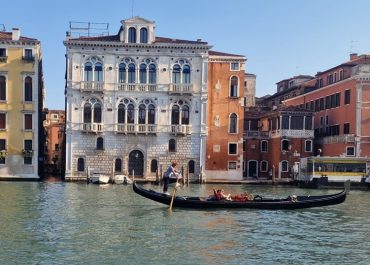
The gondola is such a unique boat that it has become one of Venice’s most iconic symbols worldwide. Let’s be honest: if you’re planning to visit the city with your children, a gondola ride — even if it feels a bit touristy — is almost a must!
If you’re looking for practical information, we recommend clicking here. But if you’re still wondering whether a gondola tour is really worth it, keep reading. We’ll show you how this experience can make your family stay in Venice truly unforgettable.
Why a gondola tour is a must-do with kids
A gondola lets you experience Venice at a slow pace, as if time stood still, transporting you back to another era. After a long day of walking, it’s wonderful to sit back, relax, and see the city from a completely different perspective.
Venice from the water is enchanting: the façades of palaces, the arches of the bridges, the riverbanks — everything reflects and flips in the water, while the movement of the tide gently distorts the edges, still marking the rhythm of daily life.
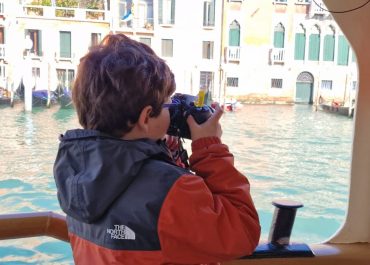
Children are often mesmerized by the gondolier, almost as if they want to steal the secrets of his craft! They’re also fascinated by life on the water: crabs clinging to the banks, fish swimming just beneath the surface, seagulls perched on the briccole (wooden poles).
How do you become a gondolier?
In the past, most trades were passed down from father to son — following in your parents’ footsteps was normal. Today, thankfully, that’s no longer the case: to become a gondolier, you need to attend the “Art of the Gondolier” course.
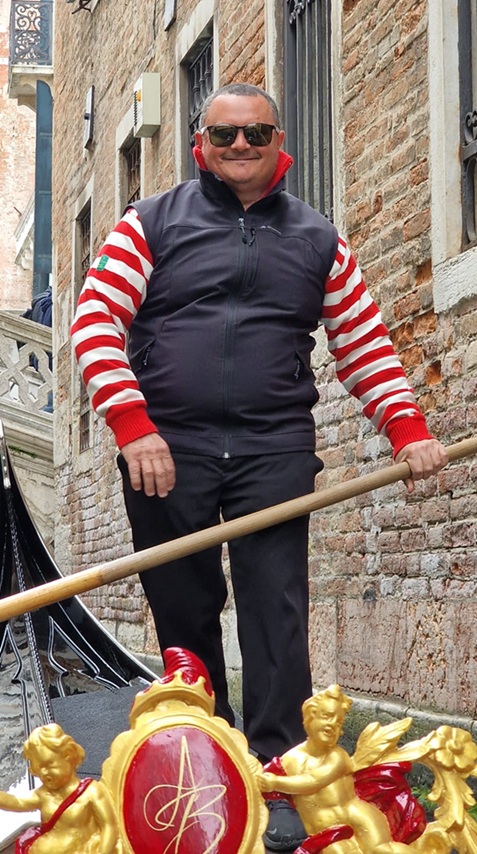
In theory, it sounds simple… but in practice, it’s not! Participants must pass a very challenging rowing aptitude test, almost impossible if you haven’t already mastered the technique. And who teaches the secrets of the trade if not your father or uncle? With a few exceptions (such as our good friend Andrea Bianchi in the picture), gondoliers are still often born into the craft.
Are there any female gondoliers?
Absolutely! Today women can also take the course, provided they pass the preliminary exam. It wasn’t easy — it took several battles to overcome the resistance in the profession — but now there are female gondoliers, and they are amazing.

Did you know…
The last person to own a private gondola was Peggy Guggenheim, the slightly eccentric American art collector nicknamed “the last Dogaressa.” She spent many years of her life in Venice, living in a beautiful palace on the Grand Canal, which houses her extraordinary collection of modern art.
Fun fact: you can discover it with us on our Peggy Guggenheim Treasure Hunt!Another famous Venetian who loved gondolas was Giacomo Casanova, using them for secret rendezvous and trips to the gaming halls. His story is closely linked to the gondola, and we tell it during our Doge’s Palace Treasure Hunt, inspired by Casanova’s legendary escape from prison.

When was the gondola born?
Before Venice became a proper city, imagine the lagoon as a cluster of small islands in the marshes. For centuries, children learned to row before they could walk! At that time, small boats called “cimbula” were used, which may be the origin of the word “gondola.”
Among Venice’s many traditional boats, the gondola — about 11 meters long — is the most elegant and the hardest to maneuver, gradually becoming a true symbol of the city.
During the Venetian Republic, noble families had private gondolas with a gondolier “de casada” at their service. Until middle 20th century, gondolas were often covered with a “felze”, a small cabin with windows providing privacy and protection from the elements.
If you join our fun Marco Polo Treasure Hunt, you’ll cross the bridge where these felze were once made. Right nearby is the only gondola in Venice (outside museums) that still has a felze.
Why are gondolas curved?

Have you noticed that the gondolier always rows from one side? If the gondola were symmetrical, it would spin in circles. Its slanted shape to the right balances the force of the oar, allowing the gondolier to go straight.
Gondolas are centuries-old works of art, still handmade, with meaning behind every detail: the iron prow, the riccio, the forcola… During our tours, we often stop in hidden spots to show you these little details that many visitors miss.
It’s a pity that our guests rarely ask us to join them in the gondola — and can you blame them? Who wouldn’t want to enjoy this magical moment in peace, instead of hearing our enthusiastic commentary about the view? After all, we are guides in love with Venice… but if you invite us, we promise to stay quiet — at least for a little while!
See you in Venice!