

Exploring the Venice Lagoon:
practical information
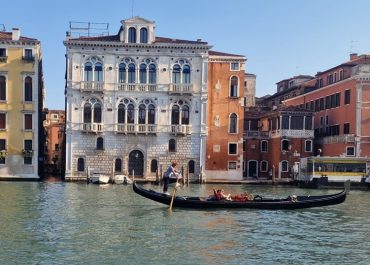
Venice would not exist without its lagoon: their destinies have been bound together from the very beginning. To truly understand the spirit of this city, it is essential to venture out and explore this extraordinary natural environment — a landscape of almost still water surfaces from which low, flat islands emerge, often covered with shrubs, where birds and fish still live today much as they did centuries ago.
Most visitors choose to start with the most famous islands — unmissable and much loved — Murano, Burano and Torcello, which offer the perfect first introduction to the Venice Lagoon.
If you are considering joining a guided tour by private water taxi, we recommend reading the description of our tour here.
If instead you prefer to explore the lagoon independently, here is some practical information that will be very useful.
PUBLIC TRANSPORT: THE VAPORETTO

If you decide to visit the islands using the public vaporetto boats and take advantage of the 24-hour travel pass, we recommend downloading the CheBateo app, which is extremely helpful for planning your journey and avoiding missed connections.
Keep in mind that, especially during high season, you won’t be the only one using public transport. Arm yourself with a little patience: at peak times you may need to wait for more than one boat.
Our advice? Start early in the morning and take the day with a relaxed attitude!
Costs
- €25 per person (2026 price)
- Children under 6 travel free
- Always remember to validate your pass before boarding, using the ticket machines
Itinerary
(Always check for updates on the ACTV website or on the CheBateo app)
Murano – Burano – Torcello itinerary
- Line 4.1 / 4.2 from Fondamente Nove
- Line 3 from Piazzale Roma or Santa Lucia train station
- Line 7 from San Marco (high season only)
Burano – Torcello – Murano itinerary
- Line 12 from Fondamente Nove
- Line 14 from San Marco / San Zaccaria
MURANO

How to get to Murano
From Fondamente Nove: vaporetto lines 4.1 or 4.2, get off at Colonna, or line 12, get off at Faro
From Piazza San Marco (San Zaccaria stop): line 7, get off at Faro
From Burano: take line 12, get off at Faro
Introduction to Murano
Murano is not far from Venice: it lies just over one kilometre from Fondamente Nove, where boats depart for the islands of the Northern Lagoon — Murano, Burano and Torcello. Every year, these islands attract thousands of visitors looking for a different experience, away from the lively crowds of the historic centre.
Murano, however, has a very local and relaxed atmosphere. Like Venice, it has internal canals and narrow streets, but the pace of life is much slower. The nobles of the Serenissima Republic knew this well: for centuries they chose Murano as a holiday retreat, building elegant palaces along the main canal — yes, Murano also has its own “Grand Canal”!
We love strolling around Murano because it feels like an open-air glass museum. It’s impossible not to be amazed by the precious artworks created by world-famous master glassmakers, but the colourful glass bead necklaces and bracelets displayed in shop windows are just as irresistible.
And it doesn’t end there: in Murano, glass appears even in the streets. In December, for example, you’ll always find a giant Christmas tree made entirely of glass!
A bit of history: blown glass
How did glassmaking end up in Murano? Believe it or not, it was the Venetian government that ordered the glass furnaces to be moved to this island at the end of the 13th century — to avoid one of Venice’s greatest threats. Don’t laugh… fires!
Although Venice is surrounded by water, in the past buildings contained far more wood than they do today. Houses were built close together, and glass furnaces had to remain constantly lit. The risk of fire spreading was enormous.
If this is your first visit to Murano, watching a glass-blowing demonstration is a must. We’ve seen it countless times, yet it still feels like pure magic: a glowing molten mass that, in just a few moments, becomes a sculpture or a vase thanks to the skill of true glass “wizards,” capable of miracles with just a few tools.
Don’t worry: it’s not difficult to enter a furnace and watch the masters at work. And if you ask us, we’ll be happy to share our favourite spots!
Did you know that the daughter of a glass master could even marry a nobleman? Glassmakers played a fundamental role in Venice’s wealth and reputation. But beware: anyone who dared reveal even one secret of the craft would face serious consequences.
This is exactly what happens to poor Angelo Barovier, the protagonist of our Murano Treasure Hunt. Through riddles and games, you’ll discover many fascinating and curious aspects of this truly special place.
By the way: we’d be delighted to personally guide you around Murano. But if you prefer to explore the island independently with your family, you can receive the material to do the Treasure Hunt on your own by purchasing one of our other tours!
What to do in Murano
Visit a glass factory
No visit to Murano is complete without stepping into a glass factory to see the glassmaking process live. Several furnaces welcome visitors: some offer free demonstrations, others charge a fee.
We recommend:
- Vetreria Ducale, a historic furnace with a large showroom
- La Fonasotta, a small artisan furnace just off the main tourist route
- La Cattedrale del Vetro, impressive in setting, though quite touristy
Take part in a workshop
For an even more hands-on experience, you can join a murrine workshop organised by Cesare della Ferro Toso, bookable online. It’s an activity particularly suitable for families and for anyone who wants to truly understand Murano’s glassmaking tradition.
Shopping
Shopping in Murano can be dangerous — temptation is everywhere! It’s fascinating to see how ancient techniques are constantly reinterpreted and creatively expressed in modern designs.
When people say Murano glass is expensive, the answer is simple: you’re not just paying for craftsmanship and quality today, but for centuries of tradition, research and innovation. There’s no doubt about it — Murano glass is still the best in the world.
That said, the many shops scattered across the island offer beautiful items for every budget, so don’t worry!
Where to eat in Murano
For something simple:
- Trattoria al Corallo and Osteria da Gege, along Fondamenta dei Vetrai
- La Perla ai Bisatei, located in Campo San Bernardo, away from the crowds
- Pizzeria del Duomo, across the canal from the church of Santa Maria e Donato
Our favourite restaurants in Murano:
- Trattoria Valmarana, on Fondamenta Antonio Maschio — elegant but not formal
- Ristorante Ai Piantaleoni, along Riva Longa
- Osteria Acquastanca, on Fondamenta Manin
Prefer to grab food and eat outdoors? There’s a Coop supermarket on Riva Longa, a bakery on Fondamenta Sebastiano Santi, and then you can head to Parco Navagero (Calle Passerini), a green space perfect for relaxing or letting kids play.
You can check the location and the links to these suggested restaurants and other places on the map below.
Gelato emergency
We’d go to Gelateria Artigianale Murano, in Calle Angelo Dal Mistro.
Bathroom emergency
Public toilets are located next to the Murano Colonna vaporetto stop (around €1.50).
Any bar also has toilets, with a purchase.
BURANO

How to get to Burano
From Fondamente Nove or Murano Faro: line 12
From Torcello: line 9
Introduction to Burano
Burano is famous worldwide for its colourful houses, whose origins are still surrounded by legends. This multicoloured charm has made the island a favourite among artists for centuries. And, unsurprisingly, today’s visitors can hardly resist taking photos at every corner!
What to do in Burano
Explore the island
Don’t be afraid to get lost in the maze of brightly coloured streets, immersed in a timeless atmosphere. With our self-guided tour, you’ll easily discover iconic corners you might otherwise overlook, such as the old fish market or the house of the legendary Bepi Suà
Discover lace-making
In some shops, you won’t just admire beautiful handmade lace — you may also be lucky enough to see one of Burano’s last lace-makers at work. Watching them is truly fascinating: they look like real magicians!
Visit the Lace Museum
The Burano Lace Museum is a small but interesting exhibition space that tells the story of this ancient craft. The visit takes about one hour.
Shopping
What should you buy in Burano? Lace, of course! But don’t forget that the island is also famous for a traditional biscuit called bussolà — tasting it is a must.
Where to eat in Burano
Simple options:
- Fritto Misto
- Principe Pizzeria
- Bar Primavera
Our top restaurant picks:
- Al Gatto Nero
- Trattoria Da Romano
- Ristorante Riva Rosa
- Ristorante Venissa, an elegant venue surrounded by greenery on the island of Mazzorbo, just a short walk from Burano
You can check the location and the links to these suggested restaurants and other places on the map below
Gelato emergency
We’d go to Dai Fradei Burano, Via B.Galuppi.
Bathroom emergency
Near Piazza Galuppi, in Rio Terà del Pizzo (€1.50).
Any bar also has toilets, with a purchase.
TORCELLO

How to get to Torcello
- From Burano: vaporetto line 9
Introduction to Torcello
If you’ve admired it from afar while visiting Burano, you won’t want to skip Torcello. Seen from a distance, it looks like an enchanted place, immersed in the quiet of the lagoon. Today it is almost uninhabited, but Torcello is actually the cradle of Venetian civilisation — one of the earliest settlements, which at its peak had up to 16,000 inhabitants.
What to do in Torcello
Immerse yourself in nature
Walk from the pier to the monumental area through a peaceful and evocative lagoon landscape.
Visit Venice’s first cathedral
The Cathedral of Santa Maria Assunta is the oldest in the Venetian lagoon and houses extraordinary mosaics, among the finest in the Veneto region.
Climb the bell tower
If you have the energy, climb to the top of the bell tower for a stunning panoramic view over the entire lagoon.
Where to eat in Torcello
All the restaurants are located along the same fondamenta that runs alongside the main canal:
- Taverna Tipica Veneziana: very simple self-service with outdoor tables, good food and reasonable prices
- Al Ponte del Diavolo: excellent restaurant with a garden
- Locanda Cipriani: a legendary place once frequented by Hemingway, with a magnificent garden.
You can check the location and the links to these suggested restaurants and other places on the map below.
Bathroom Emergency
Public toilets are next to the Archaeological Museum (around €1.50).